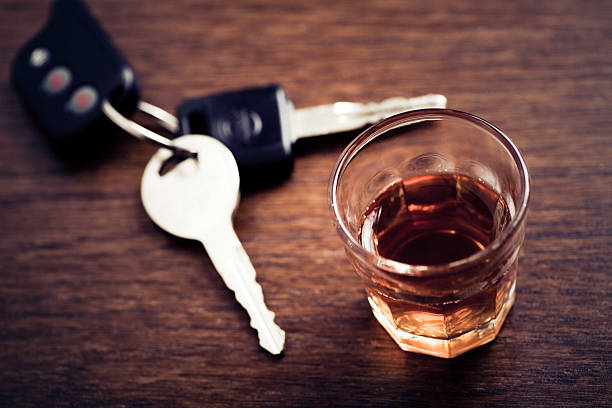
If you’re arrested for driving under the influence (DUI) in Illinois, one of the first questions you may ask is: “Do you lose your license for a DUI?” In many cases, the answer is not right away, but the suspension process can begin immediately after the arrest.
When someone is pulled over for DUI in Illinois, they may face a statutory summary suspension. This is an administrative license suspension handled by the Secretary of State, separate from the criminal DUI case. It can be triggered by either failing a chemical test or refusing testing, and it can apply even if you are later acquitted or the DUI charge is reduced.
Administrative License Suspension vs. Criminal Suspension
Many drivers are surprised to learn they may face two different legal processes after a DUI arrest. In Illinois, DUI cases move forward on two separate tracks:
- The administrative license suspension process through the Illinois Secretary of State
- The criminal DUI case (handled in the circuit court)
These systems are completely independent of one another. The Secretary of State can suspend your driving privileges even before your criminal case is resolved. At the same time, the court determines whether you will be convicted of DUI and face additional penalties.
This two-track system creates confusion for many drivers. People often assume that if they beat the criminal DUI charge, they automatically keep their driver’s license. Unfortunately, that is not always true. The statutory summary suspension may still remain in effect even if the DUI charge is dismissed in criminal court.
How the Illinois DUI License Suspension Process Begins
After a DUI arrest, the police officer will usually issue a Notice of Statutory Summary Suspension. The suspension starts on the 46th day after you receive notice. This occurs automatically if:
- You refuse testing
- You do not complete testing
- Your BAC is 0.08% or higher
- You have 5 nanograms or more of THC per milliliter of whole blood (or there is a trace of other drugs)
Drivers who refuse chemical testing face longer suspension periods than drivers who submit to testing and fail. For first-time offenders, not passing a test typically results in a 6-month license suspension. Declining to take the test raises that to 12 months. Prior DUI history can also affect how long your driving privileges are suspended.
Understanding your rights early in the process is important. There may be opportunities to challenge the suspension or seek driving relief, but strict deadlines apply after a DUI arrest in Illinois.
The Criminal DUI Process in Illinois
A DUI arrest in Illinois starts a separate criminal case. While the Secretary of State handles the statutory summary suspension, the criminal court determines whether you will be convicted of DUI.
The criminal case usually moves on a much longer timeline than the administrative suspension. In many situations, DUI court proceedings can take several months.
If you are convicted of DUI, additional driver’s license penalties may apply on top of the statutory summary suspension already in place. So while your license does get suspended for DUI under the Secretary of State, a criminal conviction can also lead to a license revocation.
For many first-time DUI convictions in Illinois, the minimum penalty is a 1-year license revocation. Unlike a suspension, a revocation does not automatically end after a certain amount of time. Instead, drivers must go through the Secretary of State hearing process to request reinstatement of driving privileges.
Penalties become much more severe for second or subsequent DUI convictions. Longer revocation periods may apply, and getting driving privileges back becomes more difficult. Because of the long-term impact a DUI conviction can have on your license and driving record, it’s important to take both the criminal case and the administrative suspension seriously from the beginning.
Seeking Legal Guidance After License Suspension for DUI
In the state of Illinois, if you’re arrested for DUI and your driver’s license is subject to suspension, you still have the right to challenge it.
From the time you’re arrested, it could take weeks for your case to be evaluated and for administrative actions to be taken against your license. During this time, you should act quickly to secure legal representation. You typically have a 90-day window to appeal a statutory summary suspension (from the notice date).
Hiring an experienced driver’s license reinstatement attorney can give you a better chance of achieving the best possible outcome.
Driving Relief Options
If you get a DUI and your license is suspended, you may still qualify for limited driving privileges in Illinois. Available options depend on your driving record and the circumstances of your case.
Some drivers may qualify for:
An MDDP may allow certain first-time DUI offenders to continue driving if they install a Breath Alcohol Ignition Interlock Device (BAIID).
An RDP is for repeat offenders or drivers who are not eligible for an MDDP. This includes those with multiple DUI convictions or previous suspensions. RDPs may allow limited driving for work, school, employment, medical needs, transporting dependents, or treatment programs.
Johnson & Goldrich, P.C., for License Reinstatement After DUI in Chicago, IL
If you’re asking, “Do you lose your license if you get a DUI?” the answer is almost always yes. If you find yourself facing a DUI charge in Illinois and wondering about the fate of your driver’s license, you don’t have to navigate this process alone.
At Johnson & Goldrich, P.C., we help drivers throughout Chicago and Illinois understand their legal options. Our firm focuses exclusively on license reinstatement and Secretary of State hearings. Whether this is your first DUI charge or a license revocation after multiple offenses, we can help.
DUI cases in Illinois can quickly become complicated because the criminal process and statutory summary suspension process move separately. Our attorneys work to help clients protect their driving privileges, challenge suspensions, and pursue available driving relief options.
Contact Us for a Free Consultation
Do not assume that giving up your license is your only option after a DUI arrest. Johnson & Goldrich, P.C., can help you better understand your situation and the path forward. Our dedicated team is ready to answer your questions. Contact us today for a free consultation.